December 2010 E-News Brief
Docomomo International: Mexico 2010 Conference Travelogue
Written by Jack Pyburn, DOCOMOMO US/Georgia
(author: second from right)
I was first in Mexico City in 1957 as a 13-year-old on a church youth trip with my new camera in tow. Consequently, the trip to the international meeting of DOCOMOMO in Mexico City 53 years later was an extra special experience. I now have two sets of photographs (one set of Kodachrome slides and one digital) from virtually the same vantage point of the Alameda Park in the Historico Centro, the top of the Latin Americana Tower (completed in 1956) and the Universidad Nacional Autonoma de Mexico (UNAM, opened in 1954). When one traces significant influences in their life, for me the 1957 Mexico City trip was formative. It influenced my professional career, a love for travel and an initial attraction to modernist work.

For me, there were at least five types of experiences that made the DOCOMOMO international meeting exceptional. The intellectual content of the presentations were rich and diverse, which continues to stimulate my own thoughts in a way professional programs and events closer to home cannot. The work of the standing committees brought together attendees around areas of on-going common interest; documentation, education and technology were quite active. The international committees were also well represented by the US and provided an interesting sphere of professional activity.
The development of acquaintances from across the globe has produced a network of colleagues that share interests, information and ideas well beyond the four day meeting. In Mexico City, I met scholars and practitioners from Belgium, Denmark and Scotland who shared a common interest in modernist work in Africa and mid-century architectural precast technology.
Tours of important modernist work put the meeting themes in the social, economic and architectural context of the host country and city. My interest in mid-century concrete drew me to the tour of Felix Candela’s thin shell work. Candela rendered an amazing array of hyperbolic forms with a spectrum of expression from minimal to baroque. DOCOMOMO US/NEW ORLEANS: IS THERE A FUTURE FOR THE RECENT PAST IN NEW ORLEANS?

Francine Stock, president of DOCOMOMO US/Louisiana, has written a compelling narrative about the current situation of the mid-century public schools in New Orleans. Featured in the recent MAS Context journal, the piece discusses the significance of the architecture to its climate and landscape, and how the process to discuss their future has failed.
Click here to read the article and the MAS Context journal in its entirity.
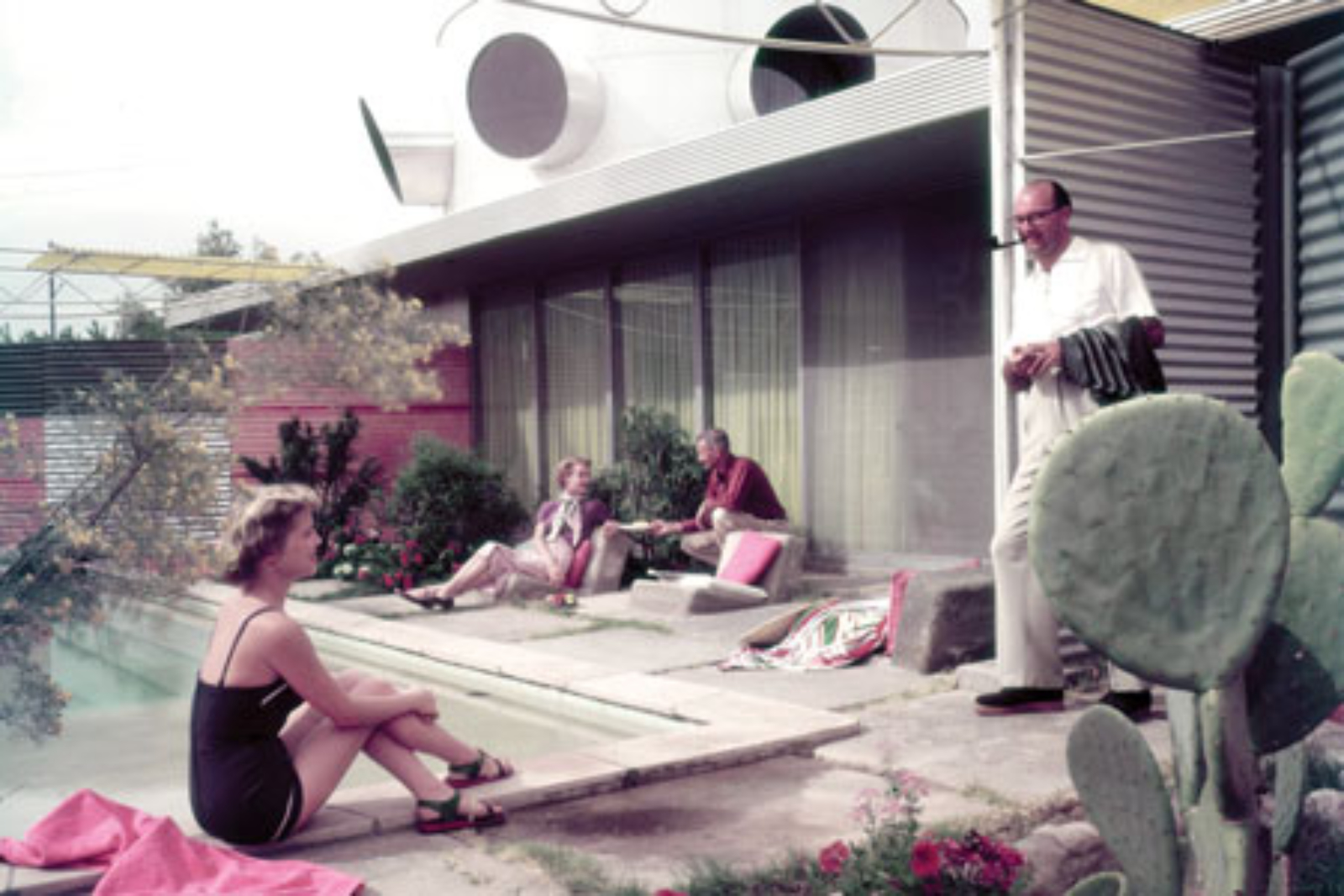
With no local protection, the Los Angeles Conservancy is seeking public comments to the EIR. Comments after December 10th should be directed to the Palos Verdes Estates City Council, which will make the ultimate decision on the fate of the Moore House.
Zonnestraal Sanatorium
The History and Restoration of a Modern Monument
Paul Meurs and Marie-Thérèse van Thoor (eds.)
The birth and history of DOCOMOMO is closely related with the preservation of the former Zonnestraal Sanatorium. The building, which is emblematic of Functionalism or Nieuwe Bouwen in the Netherlands, is a national monument of international significance and a globally recognized icon of the the Dutch arm of the International Modern Movement. Designed by the architects Jan Duiker and Bernard Bijvoet in 1925, the building is internationally regarded as one of the highlights of twentieth century architecture.
The complex was originally intended for diamond polishers who had contracted tuberculosis. In the Zonnestraal Sanatorium (the name meaning ‘Ray of Sunshine’), they could follow a long-term course of therapy and recuperate under medical supervision. The white buildings were constructed in concrete, steel and glass and were completed in 1928, with the expectation that they would be in use for a limited period once a treatment for tuberculosis was found.
By the early 1960s the complex had fallen into ruin. The restoration of the main building, supervised by the architects Hubert-Jan Henket and Wessel de Jonge, founders of DOCOMOMO, was completed in 2009, culminating some four decades of advocacy, research and planning. The battle for recognition of Zonnestraal’s importance and the complex process of the building’s restoration reads like a mystery novel, but it also constitutes a critical dossier on best practice in the curatorial management of modern monuments. Mostly recently the building was nominated for World Heritage listing.
The sanatorium’s exceptional past is traced using historical images, photographs and drawings ,while, at the same time, showing the remarkable outcome of the restoration. Dutch and international experts describe the origins of the Zonnestraal complex and the surrounding landscape, the changes it has undergone over the course of time, and the architectural, technical, landscape- and policy-related aspects of the restoration process. The result is a colorful portrait of one of the most significant examples of the Nieuwe Bouwen.
Published by: NAi Uitgevers
Release date (English): December 2010
Design: Beukers Scholma, Illustrated (colour and b/w), Hardback, 280 pages, size: 24.5 x 28 cm
Click here for more information and to purchase the publication.
Docomomo International: Journal 42 - Art and Architecture
We are pleased to announce Docomomo International Journal 42 Art and Architecture has been distributed to our international members. Journal 42 includes essays and articles discussing the synthesis of Art and Architecture and features an article by DOCOMOMO US President, Theodore Prudon.
The upcoming Winter 2010 edition, arriving in January, will explore Brazil’s capital city Brasilia. The Spring 2011 journal is also in the works and will investigate sustainability and the modern movement. Theodore Prudon is the guest editor for the spring edition.
The Docomomo International journal is a benefit of international membership and is produced twice a year. Click here to become a member of DOCOMOMO US + Docomomo International today.